
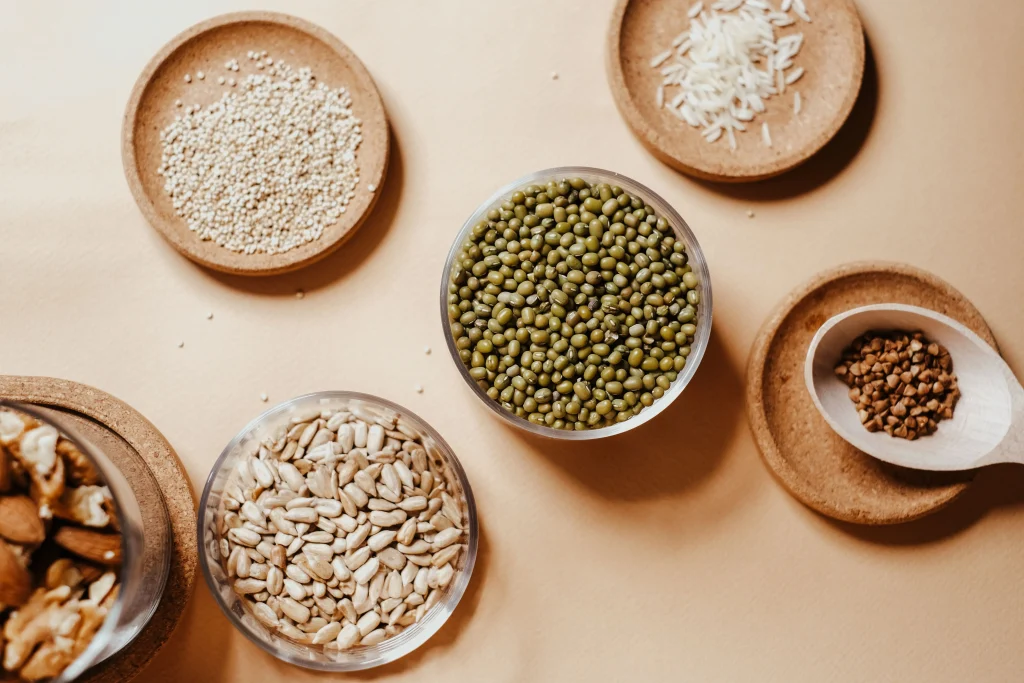
Fibre is one of the simplest parts of a healthy diet, yet it is also one of the easiest to overlook.
When people talk about improving their digestion, the conversation often turns to probiotics, fermented foods, supplements or specific “gut-friendly” products. These can have a place, but there is a much more basic question to ask first: Are you eating enough fibre?
Fibre is found naturally in plant foods such as vegetables, fruit, beans, lentils, whole grains, nuts and seeds. Unlike carbohydrates such as sugars and starches, much of the fibre we eat passes through the upper digestive tract without being completely broken down by human digestive enzymes.
That is not a problem. In fact, it is part of the point.
Once certain fibres reach the large intestine, they become food for microbes living in the gut. These microbes can ferment fibre and produce compounds called short-chain fatty acids (SCFAs), including acetate, propionate and butyrate. Research has shown that dietary fibre can influence the composition and activity of the gut microbiome, although the response varies depending on the type of fibre, the amount consumed and the individual.
For South Africans, increasing fibre does not necessarily mean buying expensive “superfoods” or completely changing traditional meals. In many cases, it means returning to simple foods that are affordable, familiar and naturally rich in fibre.
How Much Fibre Do We Need?
There is no single fibre target that is perfect for every person, but adults are generally encouraged to consume a substantial amount of fibre each day. Depending on the guideline, age and sex, recommendations commonly fall around the 25–30 g per day range.
The important point is that many people do not reach these levels consistently.
A diet can contain plenty of food while still being relatively low in fibre. For example, meals built mainly around refined grains, processed meats, sugary drinks, refined snacks and highly processed convenience foods may provide calories and carbohydrates without providing much fibre.
This is one reason that simply asking whether someone “eats enough food” tells us very little about whether they are getting enough fibre.
The quality and variety of carbohydrate sources matter too.
Fibre Is More Than Just “Roughage”
Fibre is sometimes described simply as the part of food that helps keep you regular. That is true, but it is only part of the story.
Different fibres behave differently in the digestive system.
Soluble and fermentable fibres
Some fibres can dissolve or swell in water and are readily fermented by gut microbes. These fibres can be found in foods such as oats, legumes, certain fruits and vegetables.
When gut bacteria ferment these fibres, they produce SCFAs.
Butyrate is particularly interesting because it serves as an important energy source for cells lining the colon. SCFAs also participate in signalling pathways involved in intestinal and immune function.
This does not mean that eating one particular fibre-rich food will automatically “heal” the gut. The science is more complicated than that. Different fibres feed different groups of microorganisms, and people can respond differently to the same dietary intervention.
A systematic review of studies in healthy adults found that dietary fibre interventions can influence gut bacteria and SCFA production, but the effects were not identical across all studies. The type, structure and dose of fibre all appeared to matter.
Insoluble fibres
Other fibres are less fermentable and contribute more directly to stool bulk and intestinal movement.
These fibres are commonly found in whole grains, vegetable skins and other plant foods.
Rather than thinking about soluble fibre and insoluble fibre as competitors, it is more useful to think about eating a variety of fibre-containing foods.
Different plants provide different types of fibre and different nutrients. Variety is therefore an important part of supporting the gut microbiome.
Why Fibre Intake Can Be Challenging in South Africa
There is no single “South African diet”, and eating patterns differ considerably according to culture, income, geography, household circumstances and access to food.
However, there are several factors that can make reaching a high-fibre diet difficult.
Refined grains are convenient
Maize is an important staple food in South Africa, but the nutritional composition of a maize product depends heavily on how it is processed.
Refining can remove parts of the grain, including components that contain fibre.
This does not mean that maize meal needs to disappear from the diet. Instead, choosing less-refined or higher-fibre versions where practical can be one way of increasing fibre without abandoning familiar foods.
The same principle applies to bread and other grain products.
A diet based heavily on refined white bread, refined cereals and other low-fibre grain products can make it difficult to reach a good daily fibre intake.
Legumes may not be eaten often enough
Beans, lentils, chickpeas and other legumes are some of the most useful foods when it comes to closing the fibre gap.
They provide fibre alongside protein, vitamins, minerals and other plant compounds.
They are also relatively affordable and can be stored for long periods.
Traditional South African meals already provide opportunities to include these foods. The challenge is making them a consistent part of the modern diet rather than an occasional addition.
Convenience foods can displace plant foods
Busy lifestyles can make highly processed foods appealing because they are convenient, quick and widely available.
The problem is not that every processed food is automatically unhealthy. Rather, when processed foods regularly replace vegetables, fruit, legumes and whole grains, total fibre intake can fall.
A person can therefore make a meaningful improvement simply by adding more plants, rather than focusing exclusively on what needs to be removed.
Affordable Ways to Eat More Fibre
Increasing fibre does not have to be expensive.
Here are some practical ways to start.
1. Make legumes a regular meal ingredient
Beans, lentils and chickpeas are excellent starting points.
Add lentils to stews, beans to salads, chickpeas to vegetable dishes or make a bean-based filling for a meal.
If you currently eat very little fibre, start with smaller portions and increase gradually.
2. Choose higher-fibre grains
Where available and affordable, choose whole-grain or less-refined versions of bread, cereals, oats, maize products and other grains.
You can also experiment with combining grains.
For example, oats can be added to breakfast foods, while sorghum and other traditional grains can contribute variety to meals.
3. Eat the edible skins
Some of the fibre in fruits and vegetables is concentrated in or close to the skin.
When appropriate, foods such as potatoes, carrots, apples and cucumbers can be eaten with their skins after being washed properly.
This is a small habit, but it can add up over time.
4. Add vegetables to meals you already eat
You do not need to create completely new recipes.
Add spinach or other leafy vegetables to stews. Include grated carrots in salads. Add cabbage, peas, beans or other vegetables to familiar meals.
The goal is to make plant foods a normal part of the plate.
5. Eat fruit instead of relying only on fruit juice
Whole fruit provides fibre that is largely lost when fruit is processed into juice.
An apple, orange, pear, guava or handful of berries can therefore contribute fibre while also providing vitamins and other plant compounds.
6. Include nuts and seeds
Nuts and seeds can contribute fibre, healthy fats and other nutrients.
Flaxseed, chia seeds, sunflower seeds and peanuts can be incorporated into meals where appropriate.
You don’t need large amounts. Consistency matters more than chasing a particular “superfood”.
Increase Fibre Slowly
One of the most common mistakes people make is going from a very low-fibre diet to a very high-fibre diet overnight.
This can result in increased gas, bloating or abdominal discomfort.
Why?
Your gut microbes need time to adapt to changes in the food reaching the colon. Increasing fermentable carbohydrates quickly can temporarily increase fermentation and gas production.
That does not necessarily mean that fibre is “bad for your gut”.
Instead, it may simply mean that the increase was too fast.
If your current diet is low in fibre, increase it gradually over a couple of weeks. Introduce one or two changes at a time and allow your digestive system to adjust.
People with specific gastrointestinal conditions may need individualised dietary advice, particularly if they have been advised to follow a restricted-fibre diet.
Don’t Forget Water
Fibre and fluid work together.
Adequate fluid intake helps maintain normal stool consistency, while some types of fibre absorb water and increase stool bulk.
If someone dramatically increases fibre while drinking very little fluid, constipation or discomfort may become worse rather than better.
This is particularly relevant when increasing fibre through foods such as bran or using fibre supplements.
Rather than focusing on a single universal water target, drink regularly throughout the day and consider factors such as climate, physical activity, diet and individual needs.
Should You Use a Fibre Supplement?
Fibre supplements can be useful in some circumstances, but they should not automatically replace food.
Whole plant foods provide much more than fibre. They also contain vitamins, minerals, polyphenols and other compounds that contribute to overall dietary quality.
Different fibres also have different effects.
A fibre supplement containing psyllium, for example, is not nutritionally equivalent to eating beans, vegetables, fruit and whole grains.
The better starting point for most people is therefore to ask:
How can I improve the fibre and variety of my everyday diet?
A supplement may have a role when dietary intake is inadequate or when a healthcare professional recommends a particular fibre for a specific purpose.
Fibre and the Gut Microbiome
This is where fibre becomes particularly interesting from a gut-health perspective.
Your gut microbiome is not simply sitting inside your digestive system waiting to be “balanced”. It is a dynamic ecosystem that responds to what reaches the colon.
Diet is one of the major factors shaping this environment.
Research has demonstrated that dietary fibre can alter microbial composition and metabolism. A meta-analysis of 64 studies involving more than 2,000 participants found that certain dietary fibre interventions increased the abundance of bacteria including Bifidobacterium and Lactobacillus, while some interventions also affected butyrate levels. However, effects varied between fibre types and studies.
This is an important distinction.
There is no single “best” fibre that works identically for everyone.
Instead, fibre diversity may be more useful than obsessing over one particular ingredient.
Eating oats every morning is great. But adding beans, lentils, vegetables, fruit, seeds and whole grains creates a much broader range of fibres and plant compounds for the gut ecosystem.
The Bigger Picture: Building a Higher-Fibre South African Diet
Closing the fibre gap does not require abandoning traditional foods or following an expensive health trend.
It can start with relatively ordinary foods.
Beans.
Lentils.
Vegetables.
Fruit.
Oats.
Whole grains.
Nuts.
Seeds.
Less-refined staple foods.
The goal is not perfection. It is consistency.
For someone currently eating very little fibre, adding one fibre-rich food to each day can be a meaningful first step. Once that becomes normal, another can be added.
Over time, these small changes can transform the overall pattern of a diet.
And that is important because the benefits of fibre are not limited to bowel regularity. Fibre interacts with the gut microbiome, contributes to stool bulk and fermentation, and supports the production of microbial metabolites such as short-chain fatty acids. The research is still developing, but the evidence clearly supports viewing fibre as an important part of a healthy dietary pattern rather than simply a treatment for constipation.
A Simple Fibre Checklist
If you want to start increasing your fibre intake, try asking yourself:
- Did I eat a vegetable today?
- Did I eat a piece of whole fruit?
- Did I include beans, lentils or chickpeas?
- Did I choose a whole-grain or less-refined carbohydrate?
- Did I include nuts or seeds?
- Am I eating a variety of plant foods throughout the week?
- Am I increasing fibre gradually?
- Am I drinking enough fluid?
You don’t have to answer “yes” to every question immediately.
Start with one change.
Then build from there.
Final Thoughts
Fibre may not be as fashionable as the latest probiotic or gut-health supplement, but it remains one of the foundations of a healthy diet.
For South Africans, closing the fibre gap can often be approached through foods that are familiar, accessible and affordable rather than expensive specialist products.
The most useful strategy is not necessarily to find one magical high-fibre food. It is to increase the variety and consistency of fibre-rich plant foods across the week.
Your gut microbes depend on what you feed them.
Give them variety, give them time to adapt, and make fibre a regular part of the plate.
This article is for general educational purposes and does not replace personalised advice from a doctor, dietitian or registered healthcare professional. If you have persistent constipation, abdominal pain, unexplained weight loss, blood in your stool or significant changes in bowel habits, seek appropriate medical advice.
Links for further reading:
Gut Health Resources — Gut Health SA – contains the site’s educational resources and gut-health guides. Probiotics & Prebiotics Explained — explains the relationship between prebiotic fibre and gut bacteria. Dietary Fiber Intervention on Gut Microbiota Composition in Healthy Adults — PubMed — systematic review and meta-analysis of 64 studies involving 2,099 participants. Effects of Dietary Fibers on Short-Chain Fatty Acids and Gut Microbiota Composition in Healthy Adults — PubMed — systematic review of human dietary-fibre intervention studies.