
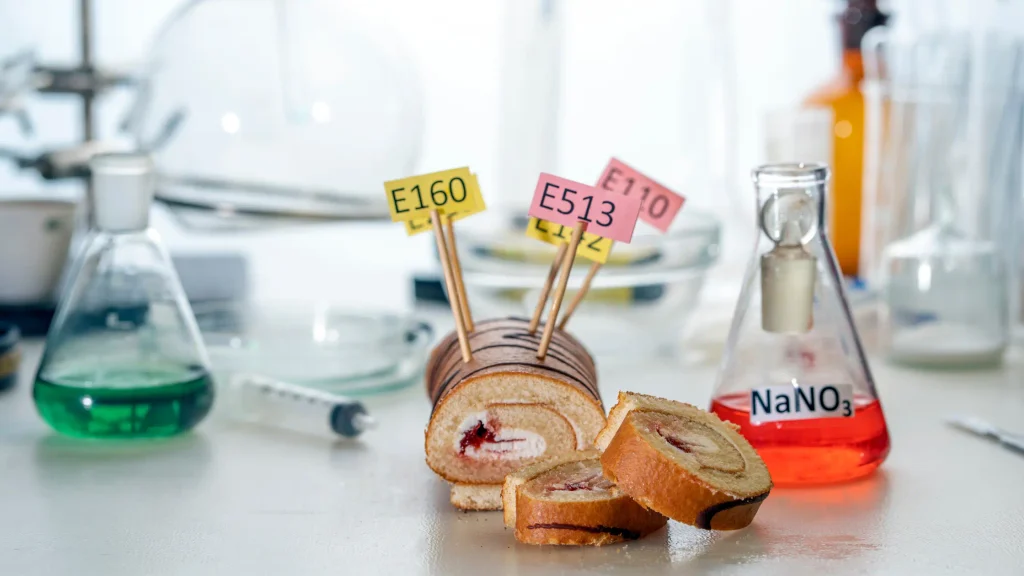
Walk down almost any South African supermarket aisle and you’ll find packaged foods containing preservatives, emulsifiers, sweeteners, colours, stabilisers and other food additives.
Most of these substances are used for practical reasons: keeping food fresh, improving texture, preventing separation, maintaining colour or making products taste sweeter.
But there is a newer question researchers are asking: could some food additives affect the gut microbiome or the intestinal environment, even when they are used at permitted levels?
The answer is more complicated than either “food additives are dangerous” or “food additives are completely harmless.”
Research is increasingly finding that certain additives can interact with gut bacteria, the intestinal barrier and metabolic processes. However, much of the strongest evidence still comes from laboratory and animal studies, while human evidence is developing.
A 2024 review in Nature Reviews Gastroenterology & Hepatology highlighted this distinction, noting that evidence linking ultra-processed foods with gut disease is largely observational, while evidence concerning individual additives comes predominantly from preclinical research.
For consumers, the sensible takeaway isn’t to become afraid of every ingredient on a food label. It’s to understand what the research actually says and focus on the overall quality of the diet.
Emulsifiers: One of the Most Studied Categories
Emulsifiers are substances that help ingredients that would normally separate — such as oil and water — remain mixed.
Common examples studied in gut-health research include polysorbate 80 and carboxymethylcellulose (CMC).
These compounds have attracted particular attention because experimental research suggests that some emulsifiers can influence the gut microbiome and the intestinal mucus layer.
Researchers have investigated whether these changes could affect intestinal permeability and inflammatory processes. A recent review of food additives and gut microbiota found evidence that different categories of additives, including emulsifiers, can influence microbial composition and intestinal-barrier function, while emphasising that more research is needed to establish how relevant these effects are to humans at normal dietary exposure levels.
This distinction matters.
A finding in a laboratory experiment or animal model does not automatically mean that eating a particular food occasionally will cause the same effect in a person.
That is why the current evidence is better described as an important area of research than as proof that emulsifiers are causing gut disease in the general population.
Artificial Sweeteners: A More Complicated Picture
Artificial or non-nutritive sweeteners are another major area of interest.
Ingredients such as sucralose, saccharin, acesulfame-K and aspartame are used to provide sweetness with little or no sugar.
Researchers have investigated whether these compounds can alter the composition or activity of gut bacteria.
The findings are mixed.
Some experimental and human studies suggest that certain sweeteners can change aspects of the gut microbiome or microbial metabolism, while other research has found smaller or inconsistent effects. A 2025 critical review concluded that artificial sweeteners may affect gut microbial composition and gastrointestinal health, but also emphasised that the results across studies remain contradictory.
A particularly important point is that “artificial sweeteners” are not one single substance. Different sweeteners can behave differently, and effects may also depend on dose, duration of exposure and the individual.
So it would be inaccurate to say that all artificial sweeteners are harmful to the gut.
At the same time, it would be premature to say that research into their microbiome effects is completely settled.
What About Preservatives and Other Additives?
Preservatives, colourants, stabilisers and other additives have received less extensive gut-specific research than some emulsifiers and sweeteners, but interest in this area is growing.
Researchers are investigating whether particular additives can influence:
- Gut microbial diversity
- Intestinal-barrier function
- Immune signalling
- Inflammation
- Microbial metabolites
- Metabolic health
A comprehensive review published in 2025 examined evidence surrounding food additives and the gut microbiota and found that substances including emulsifiers, sweeteners and preservatives can affect microbial composition in experimental models. However, the authors also highlighted important gaps in understanding how these findings translate to real-world human exposure.
That uncertainty is important.
It means we should take the research seriously without turning preliminary findings into definitive health claims.
Does This Mean You Should Avoid Processed Food?
Not necessarily.
This is where conversations about food additives can easily become unnecessarily frightening.
Food additives are regulated for safety, and the presence of an additive on an ingredient list does not automatically mean that a food is dangerous.
The bigger nutritional issue is often the overall dietary pattern.
Many highly processed foods containing additives also tend to contain relatively little fibre and fewer naturally occurring plant compounds than diets built around vegetables, fruit, legumes, whole grains, nuts and seeds.
That makes dietary quality a much more useful target than trying to eliminate every food containing an unfamiliar ingredient.
Our South African guide to eating for a healthy gut explores this broader approach, including the importance of dietary diversity and habits that support a healthy gut environment.
And importantly, an additive-free diet isn’t automatically a healthy diet. A product can contain no artificial preservatives or sweeteners while still being high in added sugar, saturated fat or refined starch.
A Practical Approach to Food Additives
Focus on the overall diet
Rather than trying to identify and eliminate every additive, build most meals around minimally processed foods.
Vegetables, fruit, legumes, whole grains, nuts, seeds and other fibre-rich foods provide substrates that gut microbes can ferment and use to produce beneficial metabolites.
Read ingredient lists without fear
Ingredient labels can be useful.
If a food contains a long list of additives and is something you eat several times every day, it may be worth considering whether there are simpler alternatives.
But there’s no need to panic because you occasionally eat a packaged product.
Prioritise fibre
For most people, improving the overall quality and variety of the diet is likely to be more useful than obsessing over individual additives.
Fibre-rich plant foods support microbial fermentation and contribute to a more diverse dietary environment for the gut microbiome.
Consider the whole food, not just one ingredient
A product shouldn’t automatically be classified as “bad” because it contains an emulsifier.
Equally, removing one additive doesn’t transform an otherwise highly processed diet into a gut-healthy one.
The context matters.
Don’t fall for “detox” claims
The growing interest in food additives has also created an opportunity for products marketed around “cleansing” or “detoxing” the gut.
There is generally no need for a commercial colon cleanse simply because you have eaten processed foods. Our article on why your gut does not need detoxing explains why the digestive system already has sophisticated mechanisms for processing waste and maintaining itself.
Frequently Asked Questions
Should I avoid all foods containing emulsifiers?
No. Current evidence does not justify blanket avoidance for everyone.
Some emulsifiers are being actively investigated because experimental research suggests they may affect the gut microbiome or intestinal environment. However, much of this evidence remains preclinical, and we don’t yet have enough human evidence to conclude that ordinary exposure to every emulsifier causes significant harm.
Reducing reliance on heavily processed foods while eating a diverse, fibre-rich diet is a more practical approach.
Are natural food additives automatically better?
No.
“Natural” does not automatically mean safer or better for the gut.
The important questions are what the substance is, how much is consumed, how it interacts with the body and what the human evidence shows.
A 2024 review specifically noted that naturally derived additives should not automatically be assumed to be superior to synthetic additives in terms of safety.
Should I stop using artificial sweeteners?
Not necessarily.
Evidence concerning artificial sweeteners and the gut microbiome remains mixed, and effects can vary according to the specific sweetener and individual.
If you use them, consider them in the context of your overall diet rather than treating them as either inherently healthy or inherently harmful.
Is the research strong enough to change dietary guidelines?
Not yet for blanket recommendations against food additives as a category.
The evidence is evolving, particularly around specific emulsifiers, sweeteners and other compounds. More well-designed human studies are needed to determine which findings have meaningful implications for everyday dietary guidance.
The Bigger Picture
The emerging research on food additives and gut health is worth paying attention to, but it doesn’t require fear.
Some additives clearly interact with the gut environment in experimental research. Some human studies are beginning to provide useful evidence, while others remain inconsistent.
The most responsible conclusion right now is that the effects depend on the specific additive, dose, dietary context and individual — and much more human research is needed.
For most people, the practical priority remains straightforward: eat a varied diet rich in whole and minimally processed foods, get enough fibre, and avoid allowing highly processed foods to dominate your everyday meals.
That’s a much more sustainable approach than trying to eliminate every ingredient with a complicated name.
GHASA’s Role
GHASA is committed to tracking emerging gut-health research and explaining it without unnecessary alarm or exaggerated claims.
Food additives are a good example of why evidence-based nutrition matters: the science is genuinely interesting, but it is also evolving.
This article is intended for educational purposes only and reflects current scientific understanding. It should not replace personalised advice from a qualified healthcare professional or registered dietitian.