
For many South Africans living with unexplained bloating, abdominal discomfort, excessive gas or changes in bowel habits, an IBS diagnosis can sometimes feel like a label without a clear explanation of what is driving the symptoms.
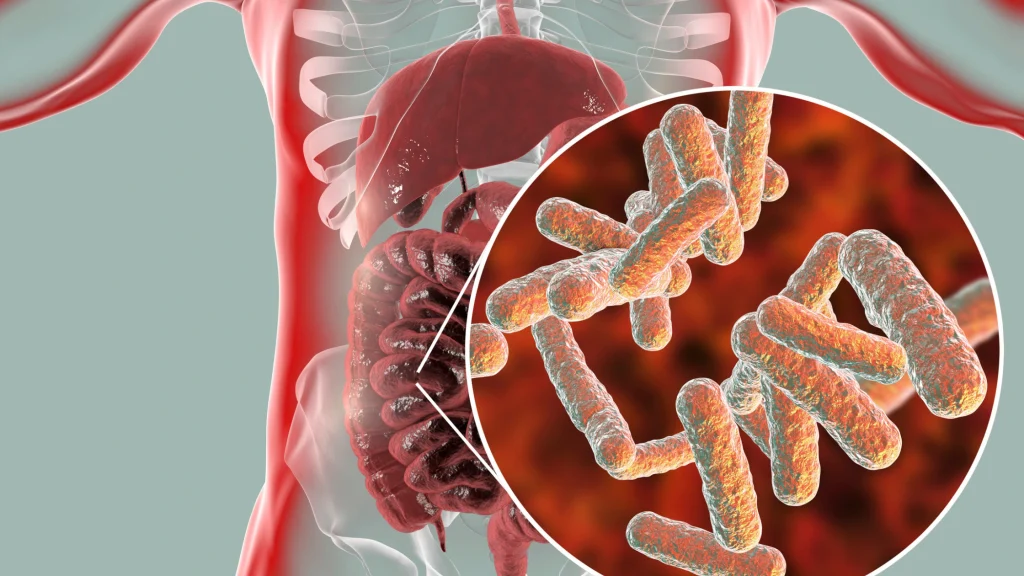
One possible cause is SIBO — small intestinal bacterial overgrowth. It is a specific gastrointestinal condition in which excessive numbers of bacteria are present in the small intestine. SIBO can cause symptoms that overlap heavily with IBS, which is one reason it can be difficult to identify.
Importantly, not everyone with bloating or IBS-like symptoms has SIBO. Proper assessment matters because several different digestive conditions can produce very similar symptoms.
What Is SIBO?
The small intestine normally contains bacteria, but bacterial concentrations are generally much lower than in the large intestine. SIBO occurs when there is an abnormal increase in bacteria in the small intestine.
These bacteria can ferment carbohydrates before they reach the part of the digestive tract where most fermentation normally occurs. This can produce excess gases such as hydrogen and methane, contributing to bloating, abdominal discomfort and altered bowel habits.
The American College of Gastroenterology’s overview of SIBO explains that diagnosis involves gastrointestinal symptoms alongside evidence suggesting excessive bacterial growth in the small intestine.
SIBO can also interfere with digestion and nutrient absorption in some people. Long-standing or significant overgrowth may contribute to nutritional deficiencies, although this is not the experience of everyone with SIBO.
What Causes SIBO?
SIBO usually isn’t simply a case of someone eating the “wrong” foods. The condition often develops when something interferes with the mechanisms that normally keep bacterial numbers in the small intestine under control.
Impaired gut motility
The small intestine uses coordinated muscular contractions to move digestive contents forward. Between meals, the migrating motor complex helps clear residual material and bacteria.
When intestinal movement is impaired, bacteria can remain in the small intestine for longer, creating conditions that favour overgrowth.
Conditions affecting motility, certain medications and some metabolic or neurological disorders can contribute to this problem.
Structural problems
Previous abdominal surgery, adhesions, intestinal narrowing and other structural abnormalities can interfere with normal movement through the digestive tract.
These problems can create areas where bacteria accumulate more easily.
Reduced stomach acid
Stomach acid is one of the body’s natural barriers against microorganisms entering the small intestine.
Certain conditions and medications that reduce stomach acid can therefore be associated with an increased risk of bacterial overgrowth. This does not mean that people should stop prescribed acid-suppressing medication without medical advice.
Other digestive conditions
SIBO can occur alongside conditions such as coeliac disease, inflammatory bowel disease and IBS. In some cases, SIBO may be a consequence of another underlying problem rather than the original cause of someone’s digestive symptoms.
This is why simply treating the bacterial overgrowth without investigating why it developed can sometimes lead to symptoms returning.
Common SIBO Symptoms
SIBO symptoms can vary considerably from person to person.
Common symptoms include:
- Persistent or recurrent bloating
- Abdominal pain or discomfort
- Excessive gas
- Diarrhoea
- Constipation
- Alternating constipation and diarrhoea
- Nausea or indigestion
- Abdominal distension after eating
- Fatigue
In more significant cases, impaired nutrient absorption can contribute to deficiencies and unintended weight loss.
The problem is that these symptoms aren’t unique to SIBO. IBS, food intolerances, coeliac disease and several other gastrointestinal conditions can look very similar.
If you’re experiencing persistent digestive symptoms, our guide to IBS in South Africa: symptoms, triggers and evidence-based strategies can provide useful context on how IBS symptoms are assessed and managed.
Why SIBO Is So Often Missed
The biggest challenge is symptom overlap.
Someone experiencing bloating, gas and irregular bowel movements may be diagnosed with IBS, lactose intolerance or another functional digestive disorder. Sometimes that diagnosis is appropriate. In other cases, additional investigation may be warranted.
SIBO has also historically been difficult to diagnose because there isn’t a simple, perfect test that can identify every case.
This is why self-diagnosing SIBO based solely on bloating isn’t recommended.
How Is SIBO Diagnosed?
One of the most commonly used non-invasive approaches is a hydrogen or methane breath test.
The patient consumes a specific sugar solution and then provides breath samples over a period of time. Bacteria produce gases as they metabolise the sugar, and those gases can be measured in the breath.
The American College of Gastroenterology describes glucose and lactulose breath testing as approaches that may be used in symptomatic patients, including some people with IBS, suspected motility disorders or previous abdominal surgery.
The ACG’s patient information on SIBO also explains how hydrogen breath testing works and why preparation before testing matters.
Because test interpretation and preparation can affect results, testing should be arranged through an appropriate healthcare professional rather than attempting to interpret symptoms or home testing independently.
How Is SIBO Treated?
Treatment depends partly on why the overgrowth developed in the first place.
Treating the bacterial overgrowth
Antibiotics are commonly used under medical supervision to reduce bacterial overgrowth. The specific approach can depend on the type of gases detected, symptoms and the clinician’s assessment.
The American College of Gastroenterology notes that SIBO may be treated with a short course of antibiotics, although recurrence can occur.
Addressing the underlying cause
This is one of the most important parts of treatment.
If impaired motility, an anatomical problem, medication effect or another gastrointestinal condition contributed to the SIBO, addressing that factor may reduce the likelihood of recurrence.
Simply eliminating bacteria without investigating why they accumulated in the first place may not provide a lasting solution.
Dietary management
Diet can sometimes help manage symptoms, particularly during treatment.
A healthcare professional may recommend a temporary reduction in highly fermentable carbohydrates, sometimes using a low-FODMAP approach.
However, a low-FODMAP diet is not intended to become a permanent, highly restrictive diet without professional guidance. It can reduce symptoms for some people, but long-term dietary restriction can also reduce dietary variety.
Cleveland Clinic’s guide to eating with SIBO explains that dietary strategies may be used alongside medical treatment and should focus on maintaining adequate nutrition.
For a broader look at what actually contributes to a healthy gut, rather than focusing on one condition, see GHASA’s The Forgotten Foundation: What Modern Science Means by a Healthy Gut.
Can SIBO Come Back?
Yes.
Recurrence is one of the challenges of SIBO. If the underlying factor that allowed bacterial overgrowth to develop remains unresolved, symptoms may return after treatment.
This is why a good treatment plan shouldn’t focus exclusively on eliminating bacteria. It should also ask:
Why did the overgrowth happen in the first place?
That might involve investigating intestinal motility, structural problems, underlying gastrointestinal conditions or medication-related factors.
Frequently Asked Questions
Is SIBO the same as gut dysbiosis?
No. The terms are sometimes used interchangeably online, but they aren’t identical.
SIBO specifically refers to excessive bacterial growth in the small intestine, whereas dysbiosis is a broader term describing an altered or imbalanced microbial community.
SIBO is therefore a more specific clinical concept.
Is SIBO the same as IBS?
No, although the two can overlap.
Both can cause bloating, abdominal pain and changes in bowel habits. Some people may have IBS alongside SIBO, while others with similar symptoms may have neither.
This is why proper evaluation is more useful than assuming every case of bloating is SIBO.
Can diet alone cure SIBO?
Diet may help control symptoms, but it generally shouldn’t be viewed as a guaranteed cure.
Medical treatment may be needed to address the bacterial overgrowth, while identifying and treating the underlying cause is important for reducing recurrence.
Should I start a low-FODMAP diet if I think I have SIBO?
It’s better to speak to a healthcare professional first.
A low-FODMAP diet can be useful for symptom management in some people, but it is restrictive. Starting it without understanding what’s actually causing your symptoms can also make it harder to identify the underlying problem.
Does having SIBO mean my gut is permanently damaged?
Not necessarily.
SIBO can interfere with digestion and nutrient absorption, particularly when significant or persistent, but treatment and management of the underlying cause can improve symptoms and digestive function.
GHASA’s Role
At GHASA, we believe gut health education should move beyond vague advice about “good” and “bad” foods.
Conditions such as SIBO require a more careful approach: understanding the symptoms, recognising when they overlap with other conditions, getting appropriate testing and addressing the factors that may be driving the problem.
Persistent bloating, abdominal pain, diarrhoea, constipation or unexplained digestive changes deserve proper attention rather than endless cycles of restrictive diets and supplements.
This article is intended for educational purposes only and should not replace medical advice, diagnosis or treatment from a qualified healthcare professional or gastroenterologist.