
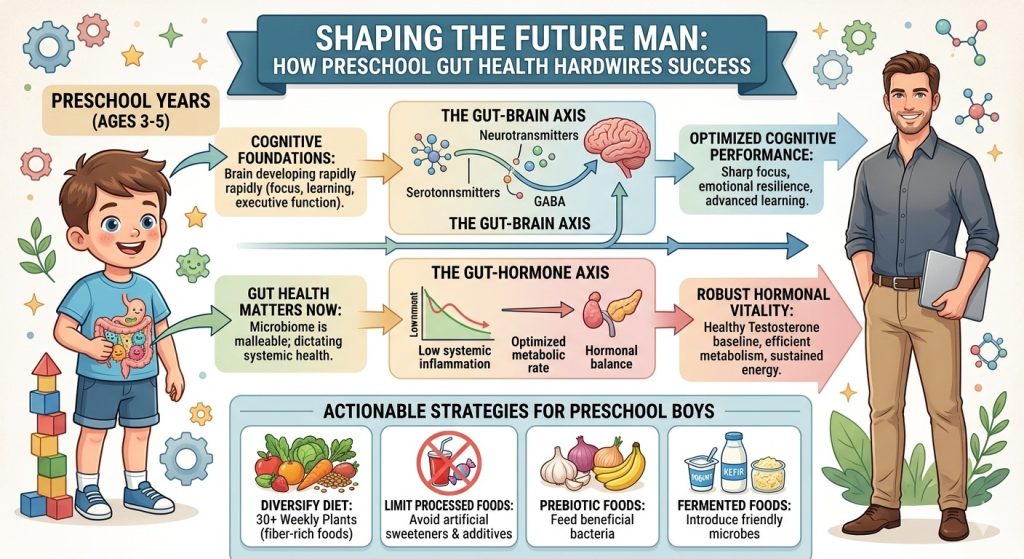
When we think about preparing a preschool-aged boy for the challenges of manhood, our instincts steer us toward behavioral coaching, sports, and early education. We focus on building character, resilience, and intellect from the outside in. However, advanced clinical research into the gut-brain-endocrine axis suggests that the true biological scaffolding for a boy’s future cognitive potential, emotional control, and hormonal health is actively being built inside his digestive tract.
For young boys, the preschool years represent a crucial neurodevelopmental and metabolic window. Nourishing a healthy, highly diverse gut microbiome during this phase does more than prevent occasional tummy aches—it actively hardwires the brain and optimizes endocrine pathways, effectively setting the baseline for his performance, focus, and vitality as an adult man.
1. The Neurodevelopmental Blueprint: Executive Function and Focus
The preschool years coincide with a massive evolutionary spike in a child’s brain development, specifically within the prefrontal cortex—the region responsible for executive function, impulse control, working memory, and sustained attention.
The gut microbiome communicates directly with this emerging command center through a complex neural and biochemical network.
Neurotransmitter Production
A thriving gut ecosystem is a primary engine for neurotransmitter manufacturing. Essential chemical messengers like serotonin and GABA (gamma-aminobutyric acid)—which govern mood stability, stress resilience, and deep focus—are synthesized directly in the gut by beneficial microbes. A boy with a rich, balanced microbiome produces optimal levels of these calming, balancing neurotransmitters, helping to protect his developing nervous system from sensory overload and chronic anxiety.
Myelination and Synaptic Pruning
For a young boy’s brain to process information rapidly, neural pathways must be insulated with a protective coating called myelin. Additionally, the brain must efficiently prune away redundant synaptic connections to sharpen cognitive performance. Metabolic byproducts of gut bacteria, particularly Short-Chain Fatty Acids (SCFAs) like butyrate, act as signaling molecules that instruct the brain’s microglia to perform this critical structural work. Supporting a boy’s gut health during preschool guarantees that his brain’s wiring is highly insulated and streamlined for long-term learning and intellect.
2. Setting the Hormonal Thermostat: Protecting Future Testosterone and Metabolic Vitality
One of the most profound, yet frequently overlooked, aspects of early childhood gut health is its direct impact on a boy’s long-term endocrine development. The state of a preschooler’s gut microbiome plays a powerful role in establishing his metabolic rate and future androgenic balance.
Preventing Chronic Neuroinflammation
When a young boy’s diet is heavily reliant on ultra-processed foods, artificial additives, and refined sugars, it feeds opportunistic, pathogenic bacteria. This imbalance, known as dysbiosis, compromises the delicate cellular lining of the gut, creating a condition often referred to as a “leaky gut.” This structural breakdown allows inflammatory toxins (lipopolysaccharides) to slip into the bloodstream.
In a young child, these toxins can breach the developing blood-brain barrier, resulting in low-grade neuroinflammation. Clinical data indicates that persistent neuroinflammation during these formative years can disrupt the hypothalamic-pituitary-testicular axis (HPTA)—the primary feedback loop that regulates testosterone production and reproductive health later in life.
Mitigating Estrogenic Accumulation
Just as women possess a specialized group of gut microbes to modulate estrogen (the estrobolome), men rely on a healthy microbiome to break down and safely excrete excess environmental and endogenous estrogens. If a boy’s gut health is neglected, an overproduction of specific bacterial enzymes can cause bound estrogens to be reactivated and reabsorbed into his bloodstream.
Over time, this early estrogenic burden can disrupt the natural hormonal balance needed for optimal male development, potentially manifesting as sluggish metabolic performance, increased fat storage around the chest and abdomen, and diminished testosterone baseline capacity in adulthood.
3. Actionable Strategies to Nourish His Microscopic Foundation
Because the microbiome remains highly adaptable during the preschool years, simple, proactive adjustments to a young boy’s daily routine can yield massive dividends for his future adult vitality.
- Diversify the Plate with 30+ Weekly Plants: Exceptional cognitive and systemic health are universally linked to a highly diverse microbiome. Challenge your household to incorporate 30 distinct, plant-rich whole foods each week—spanning vegetables, low-glycemic fruits, seeds, nuts, and legumes—to feed a wide variety of beneficial microbial strains.
- Eliminate Artificial Sweeteners and Additives: Synthetic dyes, preservatives, and sugar substitutes commonly found in kids’ snacks have been shown to directly erode the protective mucus layer of the gut, killing off brain-supporting microbes and triggering behavioral hyperactivity. Stick to unrefined, whole-food alternatives.
- Prioritize Dietary Prebiotics and SCFAs: Encourage the regular consumption of prebiotic-rich foods that naturally fuel the production of short-chain fatty acids. Garlic, onions, leeks, slightly under-ripe bananas, and cooled cooked potatoes or wild rice are exceptional options that actively support gut wall integrity and neurogenesis.
- Incorporate Fermented Elements: Introduce small, regular portions of naturally fermented foods—such as unpasteurized sauerkraut, traditional kefir, or unsweetened live-culture yogurt—into his meals to naturally crowd out opportunistic pathogens and support the gut-brain axis.
The Bottom Line: The qualities we hope to see in a grown man—unwavering mental clarity, exceptional emotional resilience, sharp focus, and robust physical and hormonal vitality—are not just forged through adolescent discipline. Their biological foundations are seeded, nourished, and hardwired inside the gut of the preschool boy. By prioritizing his microbiome today, we are quite literally fueling the performance, health, and resilience of the man he will become.
Dr Judy Bowles
Naturopathic Physician
Femina Wellness