
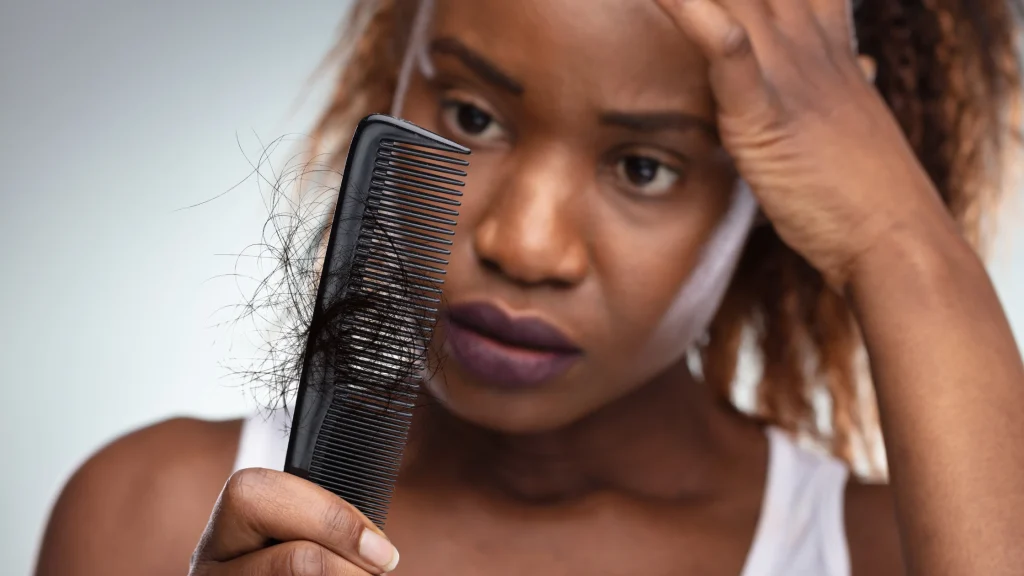
Hair thinning is one of the most discussed topics in men’s health. Yet it is also one of the most misunderstood.
Genetics play a major role in male pattern hair loss. However, they are not the only factor to consider when a man notices increased shedding or thinning. Nutrition, illness, stress and problems with nutrient absorption can also affect the hair-growth cycle.
So, is there really a connection between gut health and hair loss?
There may be, but the link is more complex than many health and wellness claims suggest.
Gut health is not a proven cure for male pattern baldness. However, the digestive system helps the body absorb nutrients and supports many aspects of overall health. When a digestive condition affects nutrient absorption, it may also affect hair health.
Genetics remain the main driver of male pattern baldness
Male pattern baldness, also called androgenetic alopecia, is a common form of gradual hair loss in men.
The condition develops when men with certain genetic traits have hair follicles that are more sensitive to male hormones. One of these hormones is dihydrotestosterone (DHT).
Over time, DHT can cause sensitive hair follicles to become smaller. The hairs then grow finer and shorter until some follicles produce very little visible hair.
Genetics therefore play a central role. Research shows that several genetic factors can influence a man’s risk of developing male pattern hair loss.
This distinction matters.
Improving gut health cannot be expected to reverse genetically driven male pattern baldness. There is no strong evidence that probiotics, gut-health supplements or “gut cleanses” can overcome the genetic and hormonal processes behind this type of hair loss.
That does not mean the gut has no role to play.
Where gut health may contribute to hair health
The connection between gut health and hair loss is mainly indirect.
Nutrient absorption matters
Hair follicles are active tissues that need a steady supply of nutrients.
Protein, iron, zinc, folate and other nutrients all play a role in normal hair growth. When someone has a genuine nutrient deficiency, correcting it may help address certain types of hair shedding.
The digestive system plays an important part in this process. Food must be digested and nutrients must be absorbed before the body can use them.
Some digestive conditions can interfere with this process. Coeliac disease, for example, can damage the small intestine and reduce the body’s ability to absorb nutrients.
If poor absorption leads to a nutrient deficiency, hair shedding can become one of the possible effects.
This does not mean that every man with thinning hair has poor gut health. It also does not mean that improving gut health will automatically stop hair loss.
Iron deficiency can contribute to hair shedding
Iron is particularly important when a man experiences sudden or widespread hair shedding.
Iron deficiency can develop for several reasons. These include low dietary intake, blood loss and problems with absorption. Some digestive conditions can also make it harder for the body to absorb iron.
However, taking an iron supplement simply because your hair is thinning is not a good approach. Too much iron can also cause health problems.
If you have significant hair shedding, a healthcare professional can decide whether blood tests are appropriate. These tests can help identify iron deficiency or another possible cause.
Inflammation and the hair-growth cycle
The gut also interacts with the immune system. Researchers continue to study how changes in gut bacteria may affect inflammation throughout the body.
Some research links inflammation and immune activity with certain hair disorders. However, scientists have not established that poor gut health directly causes male pattern baldness.
It is therefore better to view the gut-hair connection as an area of ongoing research rather than a proven explanation for common male hair loss.
Stress can affect both the gut and hair
The gut and brain communicate through what scientists call the gut-brain axis. Stress can affect digestion, appetite and bowel habits. It can also influence other processes throughout the body.
Significant physical or psychological stress can trigger a temporary type of hair shedding called telogen effluvium.
With telogen effluvium, more hairs than usual enter the resting stage of the growth cycle. Noticeable shedding may then occur weeks or months after a major trigger.
Possible triggers include serious illness, major stress, rapid weight loss and nutritional problems.
This is different from male pattern baldness.
If you are dealing with both digestive symptoms and high stress, the two may overlap. However, that does not mean your gut is directly causing your hair loss.
For more on the relationship between stress, sleep and digestive health, read GHASA’s guide to why men should not ignore the gut-brain connection.
Pattern baldness or another type of hair loss?
The pattern and timing of hair loss can provide useful clues. A healthcare professional can help confirm the actual cause.
Gradual recession or crown thinning
A slowly receding hairline or gradual thinning around the crown often points towards male pattern hair loss.
A family history of baldness can also provide a useful clue.
This type of hair loss mainly results from genetic and hormonal factors. Good nutrition and overall health can support the hair you have, but they cannot remove the genetic cause.
Sudden, diffuse shedding
Some men notice that much more hair than usual comes out when they shower, brush or style their hair.
Sudden shedding across much of the scalp can have several causes. These include major stress, illness, significant dietary changes and nutrient deficiencies.
Telogen effluvium is one possible explanation.
This type of hair loss deserves investigation rather than an assumption that it is simply male pattern baldness.
Patchy hair loss
Patchy hair loss is different again.
Alopecia areata, for example, is an autoimmune condition that can cause clearly defined areas of hair loss. This pattern requires proper medical assessment.
It should not simply be treated as a sign that you need to “fix” your gut.
How can you support your hair through better gut health?
There is no special “hair-growth gut diet” that can reverse male pattern baldness.
Instead, focus on the basics of good nutrition and digestive health.
Eat enough protein. Hair mainly consists of a protein called keratin. Consistently eating too little protein can therefore affect hair health.
Prioritise dietary variety. Include a range of vegetables, fruit, whole grains, legumes, nuts, seeds and suitable protein sources. A varied diet can help provide the nutrients and fibre your body needs.
Pay attention to ongoing digestive symptoms. Persistent diarrhoea, unexplained weight loss, ongoing abdominal symptoms or other major changes in digestion deserve medical attention. Some digestive conditions can affect nutrient absorption.
For more on common digestive symptoms in men, read GHASA’s article on beer, bloating or burnout and what your gut may be telling you.
Manage significant stress. Major stress can affect both digestive health and the hair-growth cycle. Finding practical ways to manage stress can support your wider health.
Avoid unnecessary supplements. More is not always better. Hair supplements cannot replace a balanced diet or proper investigation of a nutrient deficiency. Some nutrients can also cause harm when taken in excessive amounts.
When should you speak to a healthcare professional?
Consider getting professional advice if your hair loss is:
- Sudden or rapidly getting worse
- Extensive or causing significant distress
- Accompanied by fatigue, unexplained weight changes or ongoing digestive symptoms
- Occurring in clearly defined patches
- Starting after a major illness or dietary change
- Difficult to distinguish from male pattern baldness
A doctor or dermatologist can examine your scalp and assess the pattern of hair loss.
Depending on your symptoms and medical history, they may recommend blood tests or other investigations. These can help identify possible causes such as nutrient deficiencies or thyroid problems.
If your hair loss is due to androgenetic alopecia, you can discuss evidence-based treatment options with a healthcare professional. These may include topical minoxidil or prescription treatments such as finasteride.
These treatments have a stronger evidence base for male pattern hair loss than gut-health supplements.
Frequently Asked Questions
Can gut-health supplements regrow hair lost to male pattern baldness?
There is no strong evidence that gut-health supplements can regrow hair lost because of genetic male pattern baldness.
Good nutrition and digestive health support normal body function. They do not override the genetic and hormonal processes that cause androgenetic alopecia.
How do I know whether my hair loss is stress-related or genetic?
The pattern and timing can offer useful clues.
Gradual thinning at the temples or crown over several years is more typical of male pattern hair loss. Sudden, widespread shedding may follow significant stress, illness or a nutritional problem.
A dermatologist can help identify the cause when the pattern is unclear.
Should I have blood tests if my hair is thinning?
Blood tests may be useful when hair shedding is sudden, widespread or accompanied by other symptoms.
Your doctor can decide which tests make sense for you. Depending on your situation, these may include tests for iron deficiency, thyroid problems or other nutritional issues.
Can poor gut health directly cause male pattern baldness?
There is not enough evidence to say that poor gut health directly causes male pattern baldness.
Genetic and hormonal factors play the main role in this condition. Gut health may have an indirect role when digestive problems, nutrient deficiencies or major physical stress contribute to another form of hair shedding.
GHASA’s Role
At the Gut Health Association of South Africa, our goal is to help South African men understand the gut without turning every health concern into a “gut problem”.
Digestion, nutrition, stress and overall health are closely connected. At the same time, good health information should make clear where the evidence ends.
When it comes to hair loss, that means recognising that gut health can support overall nutritional and physical health, but it is not a replacement for proper assessment or treatment of genetic hair loss.
Understanding this difference can help men avoid expensive promises and focus on factors they can actually address.
The Bottom Line
So, is there a link between gut health and hair loss?
There can be a connection, but it is not as simple as saying that poor gut health causes baldness.
Genetic and hormonal factors mainly drive male pattern baldness. However, digestive conditions that affect nutrient absorption, nutritional deficiencies and major physical or psychological stress can contribute to other forms of hair shedding.
If your hair is gradually thinning at the temples or crown, speak to a healthcare professional about evidence-based treatments for male pattern hair loss.
If your hair suddenly starts shedding across the scalp, investigate possible triggers such as illness, stress, nutritional deficiencies or other medical conditions.
Look after your gut. Eat well. Manage stress. But do not let gut-health marketing distract you from finding the real cause of your hair loss.
Scientific Sources
- Heilmann-Heimbach S, Hochfeld LM, Henne SK, Nöthen MM. Hormonal regulation in male androgenetic alopecia—Sex hormones and beyond: Evidence from recent genetic studies. Experimental Dermatology. PubMed
- Malkud S. Telogen Effluvium: A Review. Journal of Clinical and Diagnostic Research. PubMed
This article is intended for educational purposes only and should not replace medical advice, diagnosis or treatment from a qualified healthcare professional.