
By Dr Judy Bowles
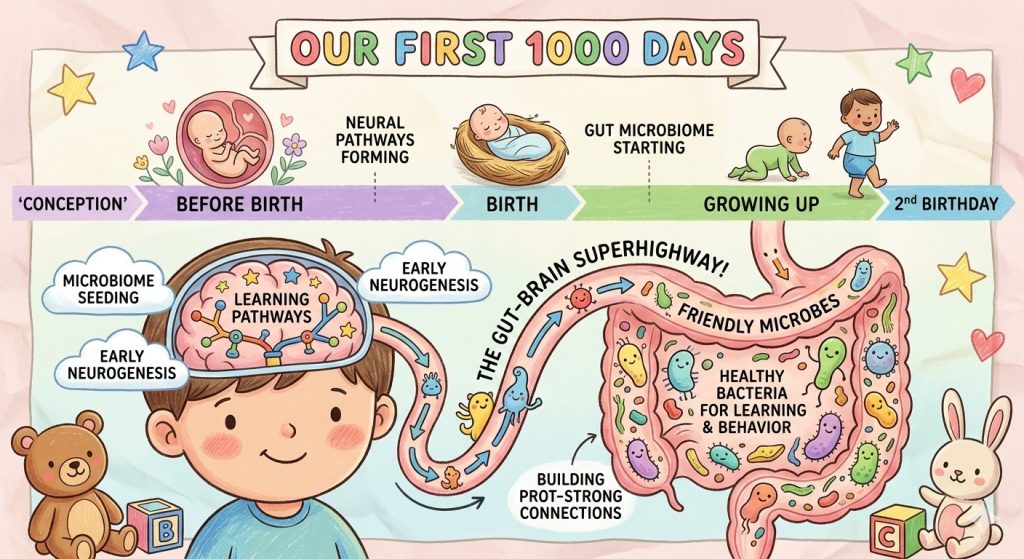
When we think about a child’s future academic success, emotional resilience, or behavioral patterns, we often look to early childhood education, parenting styles, and genetic luck. However, groundbreaking research in neurodevelopment points to an entirely different, internal frontier: the infant gut.
The window spanning from conception to a child’s second birthday – famously known as the first 1,000 days – is a critical, once-in-a-lifetime period of rapid growth. During this precise timeframe, two extraordinary phenomena happen simultaneously: the architecture of the human brain is rapidly constructed, and the pioneer ecosystem of the gut microbiome is established.
The Co-Development of Brain and Belly
From the moment of conception, a complex biological symphony begins. While a baby’s brain is forming millions of neural connections every single second, their digestive tract is preparing for its own massive event: initial microbial colonization.
Historically, science viewed the womb as a completely sterile environment and the brain as an isolated command center. Today, we know better. The colonization of the infant gut – influenced by maternal health, delivery method, and early nutrition – acts as a primary master switch for early neurogenesis (the creation of new neurons).
The gut and the brain develop in tandem, connected by a bidirectional superhighway known as the gut-brain axis. The signals sent from the microscopic organisms in a baby’s belly serve as a blueprint, helping to dictate how the brain’s physical structure is wired.
How Gut Bacteria Shape Neural Pathways
How exactly does a microscopic bacterium in the gut tell a neuron in the brain what to do? The answers lie in the biochemical messengers that microbes produce:
- Neurotransmitter Synthesis: A staggering amount of the body’s neurotransmitters – the chemical messengers responsible for mood, focus, and calm – are manufactured in the gut. Early microbial pioneers help stimulate the pathways that produce serotonin and dopamine, directly influencing future emotional regulation and learning capabilities.
- Myelination and Synaptic Pruning: For a brain to work efficiently, neural pathways need to be insulated (myelination) and excess connections need to be trimmed away (synaptic pruning). The gut microbiome releases metabolic byproducts, such as short-chain fatty acids (SCFAs), that signal the brain’s immune cells to execute this delicate landscaping work.
- Vagus Nerve Stimulation: The vagus nerve acts as a direct phone line between the gut and the central nervous system. Early gut colonization actively stimulates this nerve, training the infant nervous system how to transition out of a stress response (“fight or flight”) and into a state of calm (“rest and digest”).
Setting the Stage for Future Learning and Behavior
When gut health is compromised during these foundational 1,000 days – whether through necessary but disruptive antibiotic use, high maternal stress, or nutritional gaps – it can cause a ripple effect across a child’s developmental timeline.
An imbalanced microbiome (dysbiosis) can trigger low-grade, systemic inflammation. In a young child, this inflammation can breach the delicate, developing blood-brain barrier, leading to neuroinflammation. This subtle disruption can later manifest as:
- Difficulties with focus and cognitive flexibility.
- Heightened emotional dysregulation and intense behavioral tantrums.
- Sensory processing sensitivities and sleep disturbances.
Conversely, a rich, diverse, and well-nourished microbiome during early childhood lays down robust, highly efficient neural pathways. It builds a brain that is fundamentally wired for learning, emotional resilience, and adaptability.
Nurturing the First 1,000 Days: Actionable Steps for Parents
Because the microbiome is highly malleable during this early window, parents and caregivers have an incredible opportunity to actively support their child’s neurological future.
1. Optimize Maternal Health During Pregnancy
Microbiome seeding begins in utero and during delivery. Expectant mothers can support their own gut diversity by consuming a wide variety of fiber-rich plants, fermented foods, and managing stress levels, which directly shapes the infant’s initial microbial inheritance.
2. Prioritize Human Milk and Targeted Nutrition
Breast milk is a biological masterpiece, containing unique sugars called Human Milk Oligosaccharides (HMOs). These sugars cannot be digested by the baby; they exist exclusively to feed Bifidobacterium infantis, a crucial gut microbe that specializes in calming gut inflammation and supporting brain development. If breastfeeding isn’t an option, look for infant formulas enriched with prebiotics or consult a practitioner about targeted infant probiotics.
3. Mindful Antibiotic Use and Post-Antibiotic Recovery
While antibiotics are vital, lifesaving tools, they can inadvertently wipe out beneficial brain-supporting microbes. If your infant or toddler requires a course of antibiotics, work with a healthcare professional to implement a step-by-step roadmap to rebuild their gut diversity using specific probiotic strains and prebiotic foods immediately afterward.
4. Encourage “Clean Dirt” and Nature Play
Safely exposing your developing child to natural environments – like playing in organic soil, interacting with family pets, and exploring the outdoors – introduces diverse, friendly environmental microbes that naturally train both the immune system and the gut-brain axis.
The Takeaway: The brain is never just a product of what happens in the head. By understanding that a child’s future cognitive potential, emotional health, and behavioral resilience are deeply rooted in the gut, we can shift our focus toward nourishing the microbiome from day one. Seeding a healthy gut during the first 1,000 days is quite literally feeding a brighter future.